

Blums
BIOGRAPHY
The rupture is usually the place to start—the place where an artist connects the fractured shards of every sound or movement or lightning strike that they’ve collected and marked as their own, spitting the collage of experience back out in even line breaks. As any musician will tell you, this slow expansion takes time. Cycles must rotate to their delight before these creations can snap them into useful, beautiful pieces. A constructed world that holds all of our being, delivered in spurts of glitchy drum samples and layers of voices projecting a prayer of solitude skyward, takes ages to render.
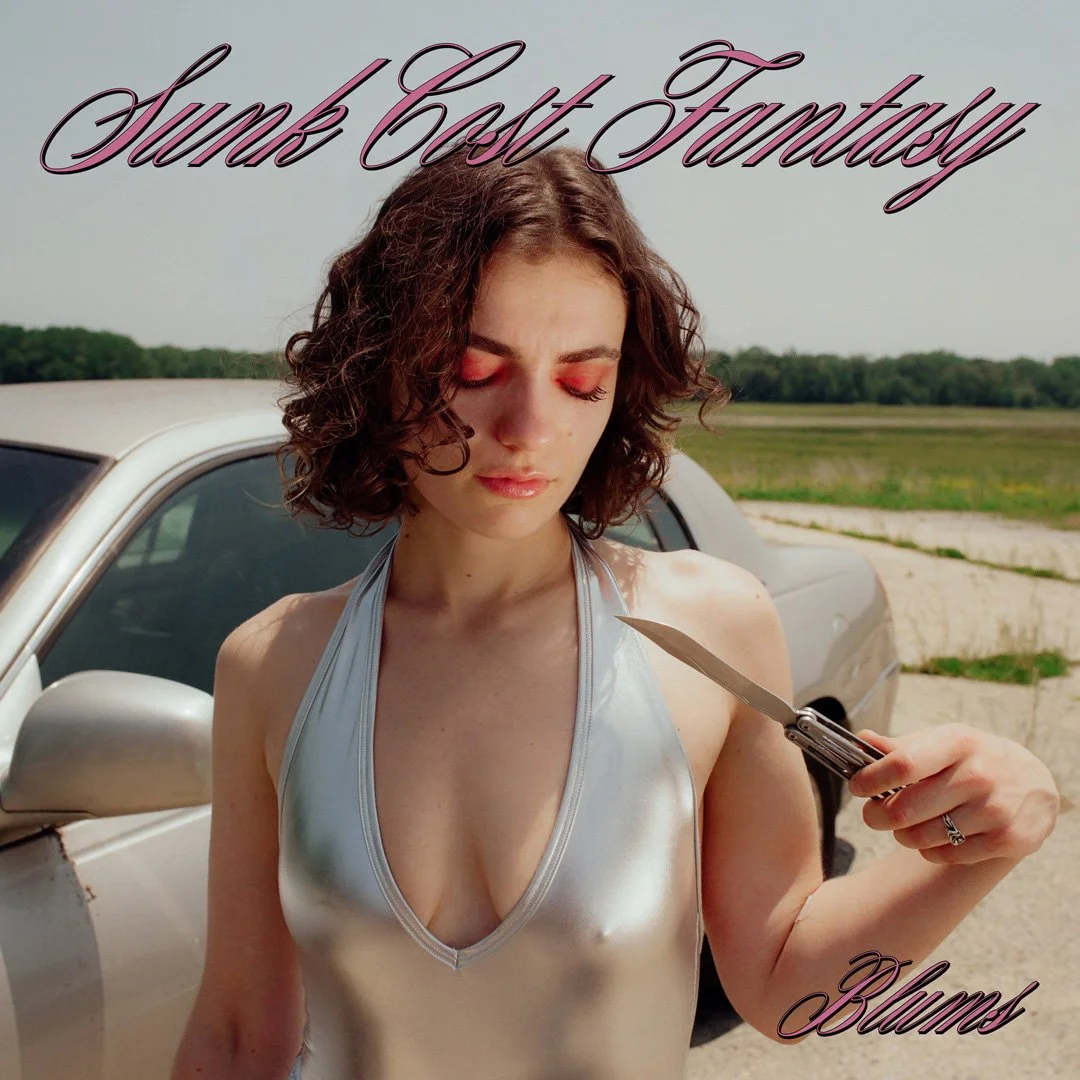
Almost a decade removed from those initial attempts at writing her own songs for the first time, Blums’s first full-length release comes in the form of Sunk Cost Fantasy—the title of which plays on the cyclical phenomenon of the sunk cost fallacy, in which one refuses to abandon a failing financial strategy due to the time or resources they’ve already dedicated towards it. Working with co-producer Kirk Palsma after several false starts in recording her own written material, the record saw Feder dedicate the collage of herself to tape over several years while also playing and singing live with local scene stalwarts like fantasy of a broken heart, May Rio, and Shallowhalo.
By honing her own artistic vision and playing chops over that recording period—backed up in the sessions mostly by musicians with jazz and classical backgrounds—she developed a firmer grasp on the sound Blums makes: chaotic and ephemeral, hook-forward but transient, a rose-tinged make-believe with sharp teeth, coming in hiccuping starts and stops. It might have come largely by throwing sounds at the wall to see what stuck on studio time, but the disorder operates within her clear artistic parameters. It comes in the lineage of the art-pop or singer-songwriter greats so many of her ilk have pulled from, sure, but through its recorded origins of trial-and-error, it also feels as exacting in its worldbuilding efforts as so many of those giants of each genre have made us feel. Opener “Intro” provides a fitting portal into the record’s world, pitched up and fragmented, before sending us headfirst into the Disney movie swirl of “Still,” floating on the power of its airy backing vocals and woozy strings over skittering percussion before the closing shove of drums knocks the dream off its axis.
These moments of disruption become the record’s driving emotional force, erupting the titular fantasy into something sacred and tangible, like where the warmth of “Celsius” is punctured by sampled noises that sound like they’re attempting to swallow the tale of distant love dying whole, or in the sputtering trip-hop interlude of “Side of the Road,” or the moment where acoustic ballad “Judy” bursts into a rhythm built on manipulated vocals. These moments are as trippy or bewildering as they are deeply felt, like you’re catching her scratching at the paradox of her desire through the door, relishing the messy sonic overload she might leave in your wake. For all the time the record took to fully realize, it plays like a burst of feeling that couldn’t be planned or rehearsed, only captured by a stroke of luck. “Cashout” builds to a fuzzy crescendo of vocalizations, written by Feder while walking manically around Maria Hernandez Park on the day of recording, and you feel like you’ve heard any constraints holding her back snap in your headphones.
Here’s the thing: escapism used to be easy. Even as we gain more man-made fantasy worlds to bury ourselves under, the circumstances around us have grown more dire and impossible to ignore. There is only so much fear the human body can hold at once before needing to dispel it, before the crush overwhelms. Blums, in its fully-realized glory, emerges as the sound of an artist who has known the moment before the wave crests and held out to discover her voice, if only to realistically capture what that near-collapse looked and sounded like. It’s the sound of searching for a cyclical break while treading water to keep yourself afloat, and the collage of ourselves that we can piece together if we finally force the break in the cycle we’re bound to. “Love unspent / It’s gotta go somewhere,” she sings repeatedly over the fairytale swoon of the record’s closing track, wishing for a place where she can prop those emotions up and stand by them, no running from the rupture.
If you say something enough times in a dream, you might make it your reality. In Sunk Cost Fantasy, the dream has already been pressed into tape and made tangible, folded into your hands. There’s nothing more real than that.
PRESS RELEASES
AUGUST 7, 2026 BLUMS UNVEILS DEBUT ALBUM, ‘SUNK COST FANTASY’
JULY 7, 2026 BLUMS SHARES DIGITAL-TINGED "SALTY," INSPIRED BY SONGWRITING CHALLENGE
MAY 27, 2026 BLUMS ANNOUNCES DEBUT ALBUM, SHARES OPERATIC SUMMER TRACK “CASHOUT”
APRIL 14, 2026 BLUMS DEBUTS WITH “SINKING/SOARING,” SIGNS TO TAKE CARE RECORDS
VIDEOS





PRESS IMAGES
CONTACT
Kenzie Davis
kenzie@bighassle.com