
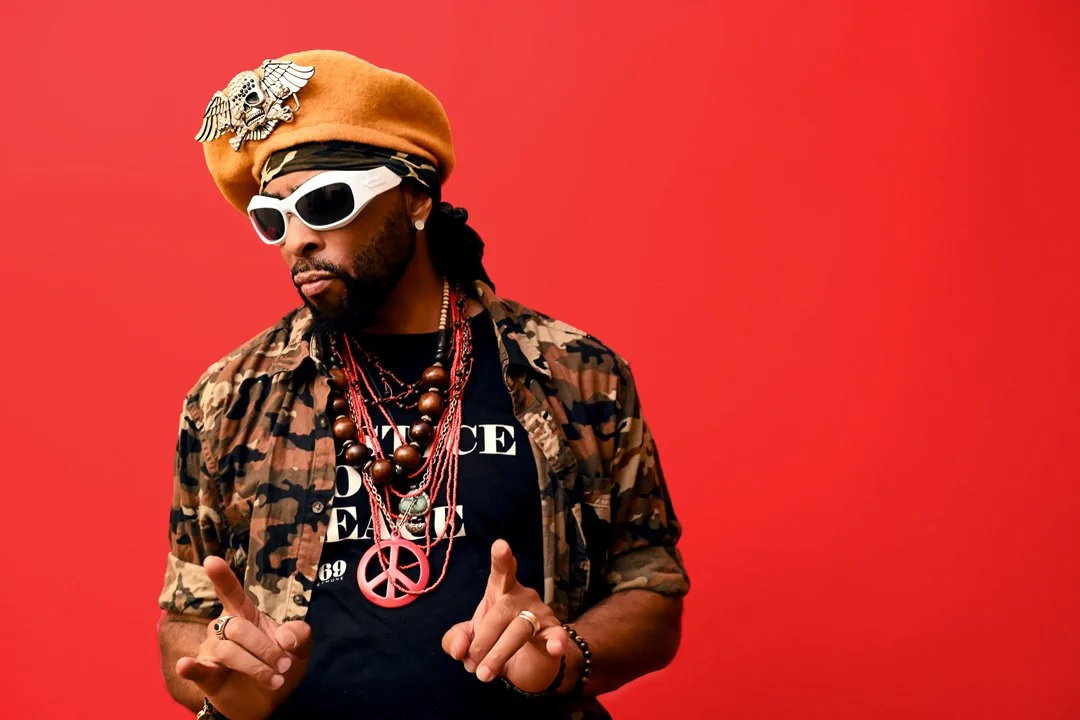
Andre Cymone
Andre Cymone
The Resurrection of Funk
For Andre Cymone, funk is not a genre he has returned to; it is a language he never stopped speaking. It is breath, motion, and memory. It is human music, learned early and lived fully. The Resurrection of Funk arrives not as nostalgia or revivalism, but as response to the present moment, to cultural amnesia, and to the growing distance between music and the people who make it. Protest music does not need to be dour to be effective; joy, movement, and celebration lift spirits and restore resolve.
The record is deeply tied to Minneapolis; not just as geography, but as ethos. There is a direct line from the city’s history of unrest and organizing to the music that emerged from it. Community centers, neighborhood bands, and shared cultural spaces weren’t accidents; they were responses. Funk, in this context, becomes protest without bitterness, resistance without despair. It is joy as strategy. Dance as defiance. Release as fuel.
Long before the world had language for “The Minneapolis Sound”, Cymone was already shaping it. Before the name, it was lived reality; his childhood home doubled as a gathering place for artists, activists, hustlers, musicians, and organizers. Civil rights leaders met on the stairs. Funk records spun in the background.
Cymone’s musical foundation was born from a reality that came with its own soundtrack. It shaped his idea of funk as something functional: music that moves bodies, centers communities, and carries memory. That melodic sensibility became central to his approach. When Cymone and Prince first met as young musicians, they were equals who had finally encountered their match. Each came armed with curiosity, discipline, and an instinct for sound beyond convention.
Their first band, Grand Central, emerged not from ambition but alignment; a convergence of two multi-instrumentalists pushing their instruments past expected roles. Cymone’s bass lines were melodic, assertive, and compositional; Prince’s keyboards and guitar work were exploratory and disruptive. Together, they built a new sonic architecture. The Minneapolis Sound was not a style borrowed or blended; it was constructed.
Cymone’s imprint is deeply embedded in the early records and stage performances that introduced this sound to the world. His contributions shaped not only Prince’s earliest solo releases, but also the DNA of the bands that followed. (In On Time: A Princely Life in Funk, Morris Day directly acknowledges Cymone’s role, recalling a conversation with Prince in which he notes how many of Cymone’s bass lines became essential components of those compositions.)
Cymone’s early solo records embraced New Wave and futurism at a time when no Black artist was expected (or encouraged) to do so. Livin’ in the New Wave and Survivin’ in the 80s developed a cult following, earning retrospective recognition as statements of artistic freedom. His next evolution came through songwriting and production. Writing and producing for artists including Jody Watley, Evelyn Champagne King, Tina Turner, Adam Ant, James Ingram, and others, he found a different kind of freedom in channeling originality through others’ voices.
After a 27-year hiatus from solo releases, Cymone once again defied expectations, returning not with funk but with two critically acclaimed rock albums: The Stone and 1969. Even then, the throughline remained clear: he was never chasing relevance, he was following the muse.
Now, with The Resurrection of Funk, Cymone arrives at a moment of reckoning; personal, cultural, and musical. For the first time in his solo career, he fully embraces the sound he helped give birth to, not as revival, but as reclamation. This is the music originally forged in his mother’s basement recontextualized, reaffirmed, and delivered with intent.
The record arrives as the music industry enters an era of synthetic replication, where artificial intelligence threatens to blur creativity into imitation. Over the years, watching funk flattened into aesthetic - looped, sampled, sanitized - clarified something essential for Cymone. Funk is not a costume. It is craft, discipline, groove, and intent. It is lived experience translated into rhythm. This record exists because that distinction has been lost; and because Cymone is one of the few artists uniquely positioned to restore it. Playing every instrument himself, with no guest musicians and no AI involvement, he asserts the irreplaceable value of human intelligence in music. Funk, in his hands, becomes proof of life.
At its heart, the album is conceptual in the purest sense: the concept is funk. Not as trend or revival, but as foundation. As the sound that underpins modern music while being routinely misunderstood. Cymone is explicit about his role here; not out of ego, but out of clarity. He is one of the architects of this sound, and this record is about placing that architecture back in view, in full context, where it belongs.
This is not a comeback. It is continuity.
Funk, as Andre Cymone understands it, never left.
PRESS RELEASES
VIDEOS
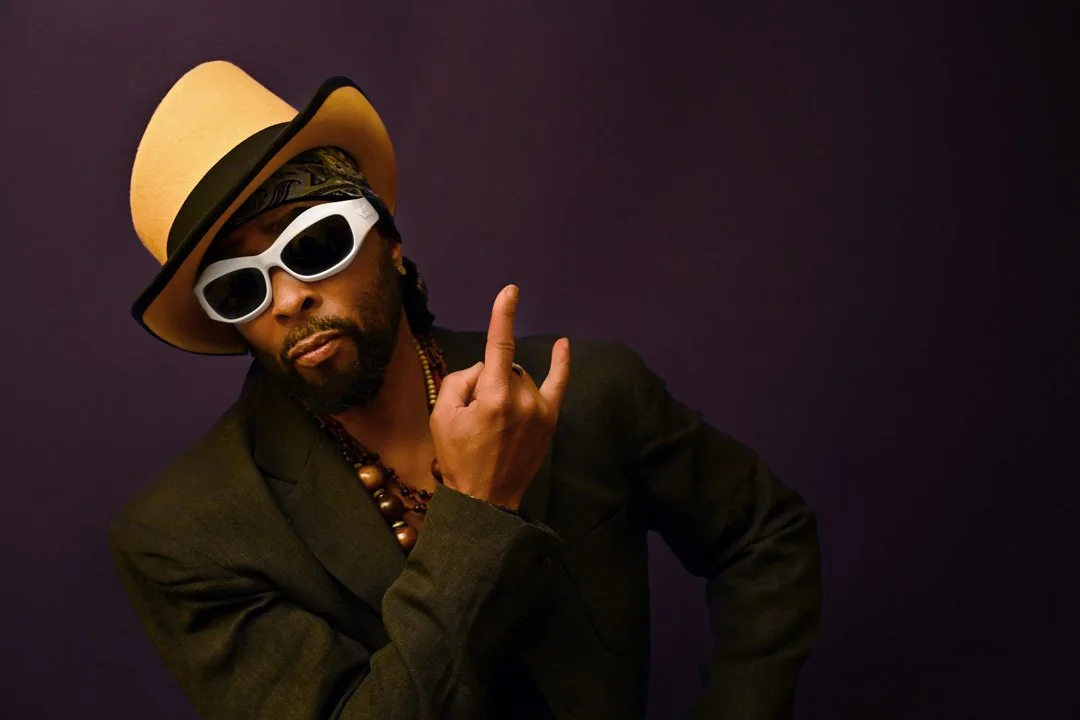
PRESS IMAGES
LINKS
CONTACT
Ever Kipp
ever@bighassle.com